Shoulder pain is very common, but not all shoulder pain is the same. A painful shoulder can make simple activities such as combing your hair, wearing a shirt, putting your inners, reaching for a shelf, or sleeping on the affected side can become difficult.
Whatever may be the cause of shoulder, the good news is that most shoulder problems can be managed without surgery when the correct cause is identified early.
At NEURON PAIN & SPINE CLINIC in Bhubaneswar, we focus on finding the actual source of pain rather than simply treating the pain with medicines.
What are the common causes of shoulder pain?
Some of the common causes include:
- Rotator cuff problems– The rotator cuff is a group of tendons that help you lift and rotate your arm. Tendon inflammation, degeneration or a partial/full tear can cause pain and weakness. Rotator-cuff problems become more common with increasing age and may also occur after an injury or repetitive overhead activity.
- Frozen shoulder– Also called adhesive capsulitis, this condition causes increasing pain and stiffness. The shoulder gradually becomes difficult to move, sometimes even with help from another person.
- Shoulder bursitis or tendinitis– Irritation around the tendons or the small fluid-filled sac called a bursa can cause pain, particularly while lifting the arm.
- Shoulder arthritisor rheumatoid affecting shoulder joints– Wear and tear of the joint can cause pain, stiffness and reduced movement.
- Cervical spine or nerve-related pain– Sometimes what feels like shoulder pain actually originates from the cervical spine spondylosis/ slip disc or nerve impingement.
- Acromio-clavicular joint arthritis– arthritis or age-related degenerated changes can cause pain.
- Trauma or Labral Tear can also cause shoulder pain
Rotator cuff or frozen shoulder — how are they different?
This is an important question because the treatment can be quite different.
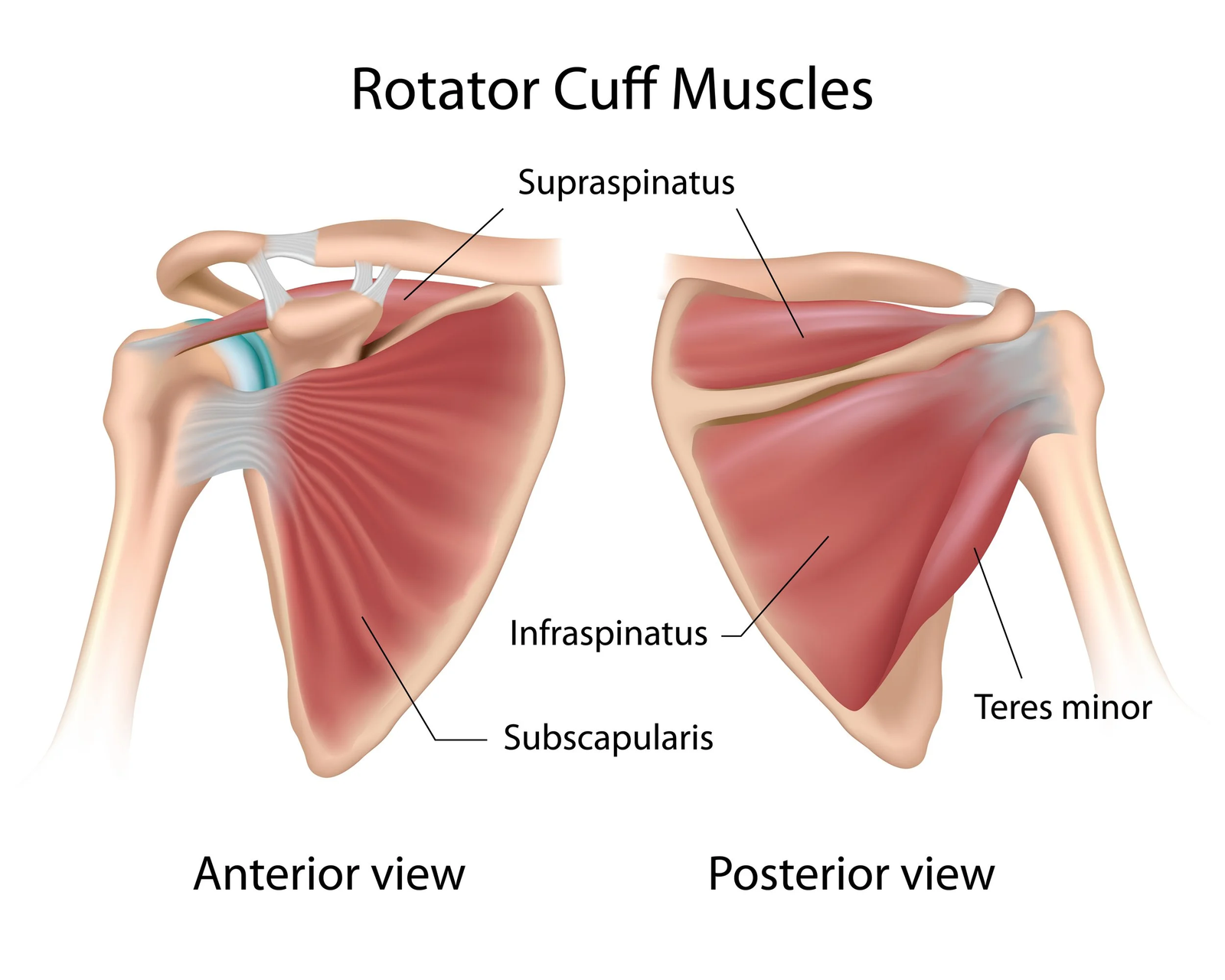
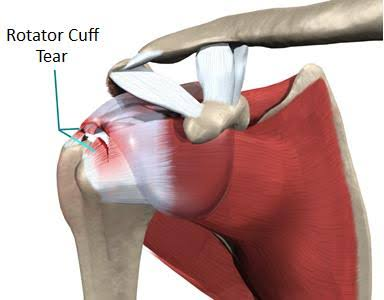
Rotator cuff is basically 4 muscles that attach to the head the humerus which forms the shoulder joint (figure 1). In a rotator cuff problem (figure 2), a person may have pain while lifting or rotating the arm and may develop weakness. An important point is that, some shoulder movements may still be possible.
In frozen shoulder, stiffness is usually the dominant problem. Both active movement (moving your arm yourself) and passive movement (someone else moving your arm) become restricted. Frozen shoulder often develops gradually and can significantly affect sleep and daily activities.
This is where a careful examination becomes extremely important.
How does ultrasound help at Neuron Pain Clinic?
One of the advantages at Neuron Pain Clinic is the use of musculoskeletal ultrasound as part of the clinical assessment.
Unlike an X-ray, ultrasound can look at soft tissues such as the rotator cuff tendons, biceps tendon and bursa in real time. It can help identify tendon inflammation, and tears and can also be used dynamically while the shoulder is moving. Evidence-based guidelines support ultrasound, along with clinical examination, as a useful tool for identifying rotator-cuff tears and other conditions.
In simple words: we don’t want to assume that every painful, stiff shoulder is “frozen shoulder.” We first try to understand what is actually causing the pain.
Why choose Neuron Pain & Spine Clinic?
At Neuron Pain Clinic, our approach is based on three important principles:
- Accurate diagnosis first
Before deciding on treatment, we try to identify the structure responsible for your pain. This may involve a detailed clinical examination, ultrasound assessment and, when necessary, other blood investigations or MRI scan.
- Precision using ultrasound
Dr. Rajendra Sahoo, Pain Medicine Consultant and Director of Neuron Pain & Spine Clinic, has undergone advanced pain-medicine training in Canada and the USA, with a particular focus on ultrasound technology, musculoskeletal pain and precision interventions.
This experience allows ultrasound to be used not only as a diagnostic tool but also to guide selected procedures with greater precision.
- Non-surgical treatment whenever appropriate
Not every shoulder problem requires surgery. Depending on the diagnosis, treatment may include medicines, activity modification, physiotherapy and rehabilitation, or carefully selected ultrasound-guided interventions.
The aim is not simply to reduce pain for a few days, but to restore movement, improve function and help you return to your normal activities.
When should you see a doctor?
Do not ignore shoulder pain if it is:
- Persistent or getting worse
- Disturbing your sleep
- Associated with weakness
- Making it difficult to raise your arm
- Following a fall or injury
- Associated with significant stiffness
Early assessment can help identify the problem and avoid unnecessary treatments.
Your shoulder deserves the right diagnosis
Shoulder pain may look simple, but its causes can be very different. Rotator cuff disease, frozen shoulder, bursitis, arthritis and nerve-related pain require different approaches.
At Neuron Pain & Spine Clinic, Bhubaneswar, our goal is to combine clinical expertise, ultrasound technology and precision pain interventions to provide personalised, evidence-based and minimally invasive care whenever appropriate.
Dr. Rajendra Sahoo
Pain Medicine Consultant & Director
Neuron Pain & Spine Clinic, Bhubaneswar