What is Knee and Joint Arthritis?
At its core, arthritis is a disease that causes pain, swelling, and progressive stiffness within your joints. While it can develop anywhere in the body, it most frequently strikes the knee—the largest and strongest joint we have.
When you consult a knee or joint arthritis specialist in Bhubaneswar, they will typically look for one of the three most common variations:
Osteoarthritis (OA): The most widespread form. It occurs when the cartilage—the slippery, protective cushion between your bones—gradually wears away, causing bones to rub painfully against each other.
Post-Traumatic Arthritis: A specific subtype of osteoarthritis that develops years after a physical injury, such as a sports collision or a vehicular accident.
Rheumatoid Arthritis (RA): An autoimmune condition where the body’s immune system mistakenly attacks the synovial membrane lining the joints, causing severe chronic inflammation.
Understanding the Stages of Knee Degeneration
Osteoarthritis doesn’t happen overnight. It typically progresses through five distinct phases:
Stage 0 & 1 (Normal to Minor): Healthy joints or very early wear-and-tear that rarely causes noticeable pain.
Stage 2 (Mild): This is usually when patients first book an appointment for joint pain treatment in Bhubaneswar. You will feel occasional stiffness and pain, though some cartilage buffer remains.
Stage 3 (Moderate): The cartilage shows obvious erosion, gaps begin to narrow, and daily movements become consistently painful.
Stage 4 (Severe): The joint space is drastically reduced. The bones are scraping against one another, causing intense pain, bone spurs, and severe mobility limitations.
Why Early Detection Matters: The earlier you see a knee joint pain specialist in Odisha, the more options you have. Early-stage arthritis can often be managed effectively with targeted, non-surgical interventions, saving you from a joint replacement down the road.
Non-Surgical Options for Knee & Joint Arthritis Treatment
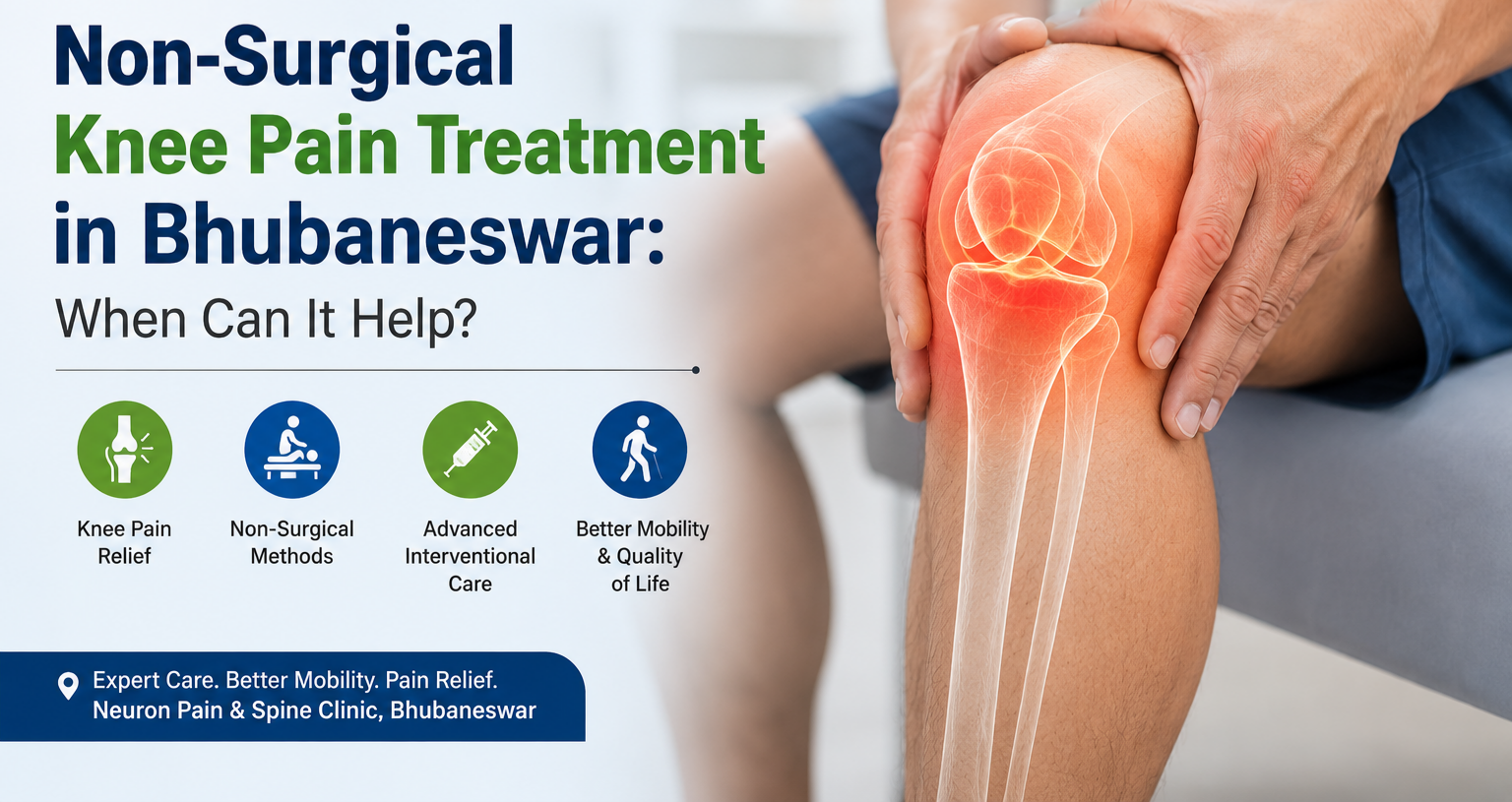
Many people delay visiting a clinic because they fear that a specialist will immediately recommend major surgery. Modern pain medicine offers highly effective, advanced, non-surgical alternatives to manage pain and restore function:
Advanced Interventional Pain Management: Specialized procedures like genicular nerve blocks or radiofrequency ablation (RFA) can safely turn down the pain signals sent from the knee to the brain.
Viscosupplementation: Injecting lubricating fluid (hyaluronic acid) directly into the joint to mimic natural joint fluid and reduce mechanical friction.
Regenerative Therapies: Utilizing the body’s natural healing mechanisms to support and protect the remaining joint tissue. We use PRP & BMAC for this purpose with good outcomes. All the above procedures are performed using ultrasound technique.
Tailored Physical Therapy: Rebuilding the strength of the quadriceps and hamstring muscles to take the structural pressure off your knee joint.
Lifestyle changes: Weight loss, good nutrition, exercise program to strengthen the knee muscles, and cycling goes a long way in shaping the knee for long-term relief. Furthermore, avoiding squatting or sitting cross-legged is also very essential.